
Apprenticeships
Earn, learn and build your future at Nescot. If you’re ready to get into the world of work, an apprenticeship is the smart choice. You’ll earn a salary, gain real job experience and achieve nationally recognised qualifications, all while building the skills employers are looking for.

Start your career, not just a course
At Nescot, you’ll spend most of your time working with a real employer, learning on the job and developing practical skills that set you apart. Alongside this, you’ll attend college sessions where expert tutors support you every step of the way.

Earn. Learn. Succeed.
Instead of waiting until after college or university, you’ll already be building your CV, making industry contacts and progressing in your career. Many apprentices stay on with their employer or move quickly into higher-level roles.
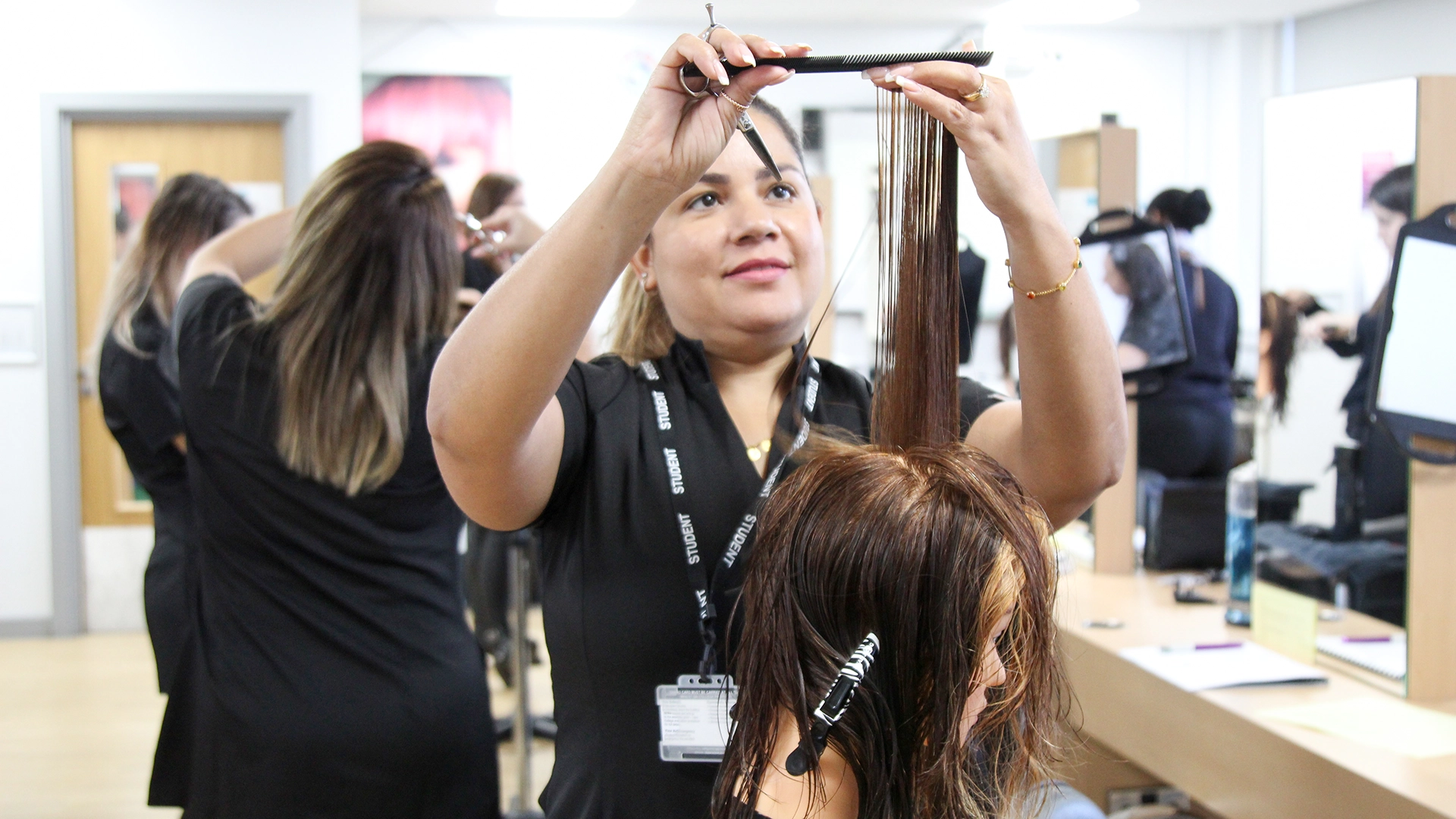
Train with the best
As one of the leading apprenticeship providers in Epsom and Surrey, Nescot works with top local and national employers, meaning your training is up to date, relevant and designed to help you succeed. Whether you’re interested in business, construction, engineering, digital or beyond, there’s an apprenticeship pathway waiting for you.

Apprenticeship Academy
As a college, we pride ourselves on ensuring our learners are aware of all the routes and progression pathways available to them. It is of utmost importance to us that our students can get specialist advice on all their options whether they are progressing or finishing their education with us. Therefore, we have invested in the Apprenticeship Academy programme which allows us to refer and encourage our students to learn everything they need to know to find, apply for and interview for apprenticeship opportunities.
Our partnership with the Apprenticeship Academy allows us to ensure our students are getting up to date knowledge, support, and advice on how to secure apprenticeship opportunities as progression from their course at the college and an alternative to University or Employment. Our college community has access to a Padlet with a range of resources to support us and our young people at every stage of their apprenticeship journey. We have access to this during and beyond our subscription.
We are sure that this is a fabulous and impactful addition to our careers programme and allows us to give our students the broad spectrum of knowledge that they need to create a successful future for themselves.
Apprenticeships at Nescot





Questions about apprenticeships?
An apprenticeship enables anyone aged 16 and over to learn a profession by learning knowledge and skills in the classroom and gaining practical experience at work.
- Earn while you learn.
Like your colleagues, you’ll get paid a wage right from your first day. Like the other students at college, you’ll be getting all the training and help to make sure you get your qualifications. - Get the best of both worlds.
You’ll get at least the minimum wage for your age, but many apprentices earn much more. You can find out more about the national minimum wage here. - Get the qualifications you need.
Apprenticeships are highly focussed on helping you develop and achieve the skills, experience and qualifications employers want you to have. That means the college will also make sure your maths, English and IT skills are up to scratch. - Learn at your own pace.
Another benefit to on-the-job training is that you can take the time to make sure you understand something, and ask for help if you don’t. Your Nescot tutor will also be happy to help if you have any questions about what you’re learning at work. - Do a real job.
Like your colleagues, you’ll get paid holidays and other benefits such as pension contributions. You’ll be working alongside full-time members of staff so you can get a sense of what the job will be like once you finish your training. - Great support.
Again, you have the best of both worlds, with your employer and the college working together to help you get the skills and experience you need to gain your qualification. - Practical experience.
By the time you finish your apprenticeship you’ll not only be qualified to work in the trade, you’ll also have an understanding of your role and your industry you can’t read in a book. - Great prospects.
One you’ve finished your course you could stay with your company, perhaps with a promotion, or look for a full-time job elsewhere. Our apprentices tell us the practical experience they’ve had helps them stand out from other candidates when they apply for job, and makes them feel more confident too. You could also continue into Higher Education. - Transferable skills.
Although your apprenticeship will be very focussed on your particular profession, you’ll also learn a lot of skills you’ll find useful in other industries and careers. For example, health and safety requirements, numeracy, time management and an understanding of how different roles and industries work together.
- You can apply for the apprenticeship online by clicking on the ‘apply now’ button on your chosen apprenticeship.
- We will arrange an interview with a Nescot assessor, who will review your qualifications and check that you meet the entry requirements for the apprenticeship you have chosen.
- We will also talk to you about whether you have an employer, and if you don’t, how we can help you to find one. You will also be able to talk about your other options, such as studying full-time.
- Read the information here for more information about your next steps in applying for an apprenticeship.
- Find our latest Apprenticeship job vacancies here
Anyone who has been a resident in the UK/EU for three years or more, is aged 16
or older, and who is not currently in education is eligible to study an apprenticeship.
Entry requirements vary between courses, but they are flexible. You will need
to show that you are interested in and committed to the course you’ve chosen.
Typically, you will need a Grade 4 GCSE in English and Maths.
As an apprentice you need to be employed for at least 30 hours per week in a relevant job. We can support you to find a suitable employer, but here are some of the things you can do:
- Be proactive and contact local businesses that you are interested in working for to enquire if they take on apprentices.
- Check out our current apprenticeship vacancies here and apply to the role you are interested in.
- Send an email with the details of which apprenticeship you are interested in to businesscentre@nescot.ac.uk. The Business Centre team will help you to reach local employers, and keep you informed of any incoming vacancies.
- Have a look at the national apprenticeship website www.gov.uk/apply-apprenticeship to find and apply to apprenticeship
vacancies in your area.
One of the benefits of doing an apprenticeship at Nescot is that you’ll get support from both the college and your employer. The college has a dedicated apprenticeship team with staff experienced at helping apprentices and their employers, and they’ll visit you at work to help you through the course. You can expect:
- A dedicated team to support you through your English, Maths and ICT
- Highly-qualified tutors
- Occupational experts and assessors to assess you in the workplace and support you through your whole qualification
- Dedicated Apprenticeship advisors to provide general support throughout
- Access to the latest IT software and equipment, and our refurbished Learning Resource Centre
We hope you’ll be very happy while you’re studying on your apprenticeship programme. If you do have any questions at any point you can speak to your assessor, or contact the apprenticeship team by calling 020 8394 8425 or emailing apprenticeships@nescot.ac.uk
You can find out more about what Nescot does to support students here.
An apprenticeship is a framework of qualifications which takes place in the workplace and assesses your ability to undertake specific parts of the job.
An apprenticeship is usually made up of at least 4 parts:
- The competency qualification (NVQ)
This is specific to each course. A college assessor will visit you at work at various points during your course and observe your practical skills, judging you either as ‘competent’ or ‘not competent’. If you are judged as not competent you’ll be able to get some more practice before being assessed again.
- The knowledge qualification (Technical certificate)
This is an academic assessment of your knowledge, but not all apprenticeships have this component. The assessment method is decided by the awarding body, and could include case studies, projects, practical skills tests and exams.
- Functional Skills (English, Maths and IT)
As part of your apprenticeship you are required to achieve a level of Maths, English and IT to enable you to meet the needs of employers. If you already have qualifications such as GCSEs, AS or A-Levels, you may not need to do Functional Skills. Not all apprenticeships need you to have all three Functional Skills. You’ll be assessed through online multiple choice exams.
- Employment rights and responsibilities
Every apprentice must demonstrate they know and understand the rights of employers and employees under employment law. Teaching will cover topics including health and safety, equality and diversity and other contractual rights.
You may also have to take some sector-specific qualifications, but this will be explained at your interview.
- If you’re aged 16 to 18 you won’t have to pay anything to become an apprentice because the Government will fund your apprenticeship.
- If you’re over 19 your employer will pay a contribution for your apprenticeship.
- For more information about our Advanced Learner Loans, for students aged 24 and over, and other types of help available visit our Student Finance page.
- As an apprentice, you’re legally entitled to earn at least the apprenticeship minimum wage for your age, although some people earn much more.
Apprenticeship or full-time course?
We are often asked by young people and parents about the differences between an apprenticeship and a full-time college course. This table highlights the key differences and similarities.
| Apprenticeship | Full-time Course | T-Level | |
|---|---|---|---|
| What is it? | A full-time job of 30+ hours per week, with around 20% of time spent in training. Nescot is the training provider for a number of apprenticeship employers in various sectors. | A study programme, taught in college for around 16 hours per week. You’ll also need to allow time for private study. | A Level 3 qualification (A-Level equivalent), taught in college for around 16 hours per week. You’ll also do an extended work placement (c. 45 days). |
| What qualifications will I earn? | During your apprenticeship you will be learning and developing new skills assessed through knowledge tests and practicals. Most apprenticeship standards nave a formal qualification eg. a City & Guilds Level 3. Some standards do not contain a formal qualification but do contain a programme of training. | Your study programme will include one main qualification. You’ll also have tutorial and enrichment. | Your study programme will include one main qualification. You’ll also have tutorial and enrichment. |
| How do I apply? | Apply to the employer with selection by the employer. They place you in training. Nescot can help you find an employer (subject to your circumstances). | Apply to the college – entry based on GCSE grades and an interview. | Apply to the college – entry based on your predicted and actual GCSE grades and an interview with a subject specialist. |
| Where will I be based? | In the workplace, and usually weekly or monthly days in the college. | In college, though most Nescot programmes include some time on work experience. | You will be in College for an initial period and to complete the study element of the course, but you will also be based with an employer for about 9 weeks in total. |
| How long does it last? | Varying time frames depending on the programme, from around 18 months up to four years. | Level 1 and Level 2 courses: one year. Level 3: mostly two years (some subjects are one year). | A Level 3 course lasting 2 years. |
| Do I need English and Maths? | Yes, you will do Functional Skills at Level 2, unless you have minimum grade 4 in GCSE English and Maths | Yes, Functional Skills or GCSE, taught in college, unless you have minimum grade 4 in GCSE English and Maths. | You will need to have already gained GCSE at Grade 4+ in English and Maths to enrol on a T Level. |
| What are the fees? | There are no fees for under-19s. For over-19s, the employer pays a contribution towards the training costs. | There are no fees for courses for under-19s. | There are no fees for any courses for under-19s, including T Levels. Your work placement will not be paid, but your employer may be able to cover expenses such as travel. |
| Progression | Successtul completion of your apprenticeship will often lead to a permanent job with your employer. You will also have improved career prospects in the sector, and many students progress onto higher-level apprenticeships. | Success in your course will help you to progress onto Higher education, into employment or onto an apprenticeship. | UK universities accept T Levels as entry qualifications for relevant subjects. You can also aim to progress straight into a career, as you will have substantial work experience by the time you complete the course. |
| More details | Explore our apprenticeships. | Explore our full-time courses. | Explore our T-Levels |
More questions?
We’re always happy to chat with you about your options.
If you need help, or have any questions, please contact the Admissions team.
You are our top priority
As a student here, you are our top priority from the first time we meet you. Our team will ensure you have the best advice and guidance when you apply, the best possible education and training while you are here, and leave with the qualifications and skills to achieve your ambitions. Outside of the classroom, our dedicated and passionate team of support staff will help you to enjoy your time here, providing a range of services and out-of-class activities to ensure you get the most from the time you spend with us.


I chose to do an apprenticeship as it unlocks a lot of connections. You get workplace experience as well as learning the skills at college, which is very helpful. I like doing practical work, the balance of being hands-on, and learning what you’ve worked on at college, gives you a better understanding of how everything works. It really helps you succeed. Once you find your place, and what you like doing, it’s very fulfilling.

We love having apprentices because it’s a great way of continuing to improve our collective skills and expertise. Our apprentices can learn from the expertise of our experienced colleagues, and the whole team benefits from keeping up-to-date with the latest early years theories and principles. We see apprenticeships as a long-term way of developing staff.
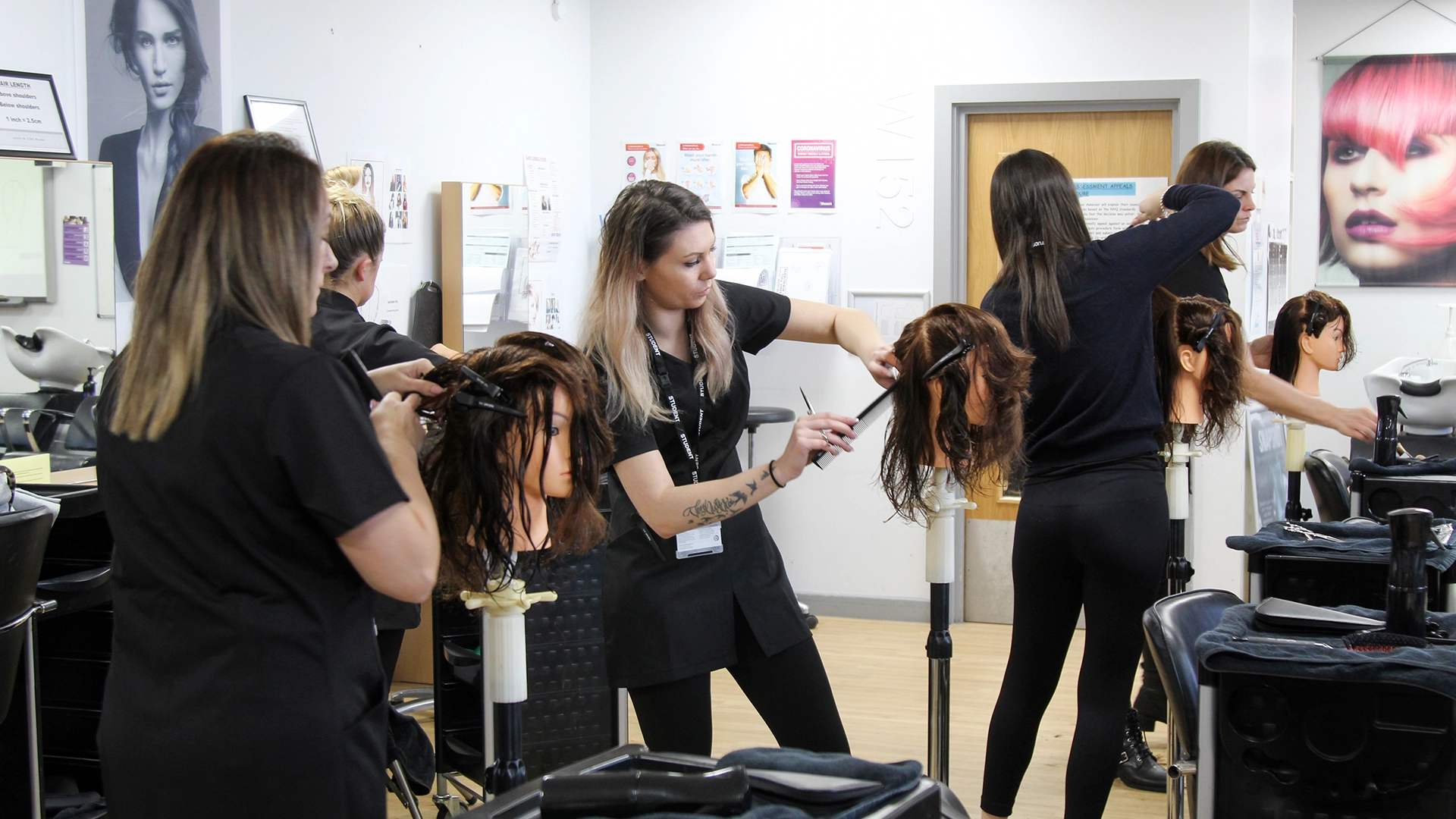
Excellent facilities with state-of-the-art equipment
Our campus is built around you. With specialist training facilities, dedicated study spaces and places to relax and socialise, you’ll find everything you need to succeed and enjoy your time at Nescot.
More information

Careers advice
We’ll help you to grow in confidence and gain the skills and qualifications you need.

Help & support
We want you to be successful and to make the most of your opportunities at Nescot.

Apprenticeship guide
Read our handy guide for Apprenticeship applicants.